Pipe Bursting vs. CIPP Lining: How Trenchless Sewer Replacement Actually Works
September 17, 2026
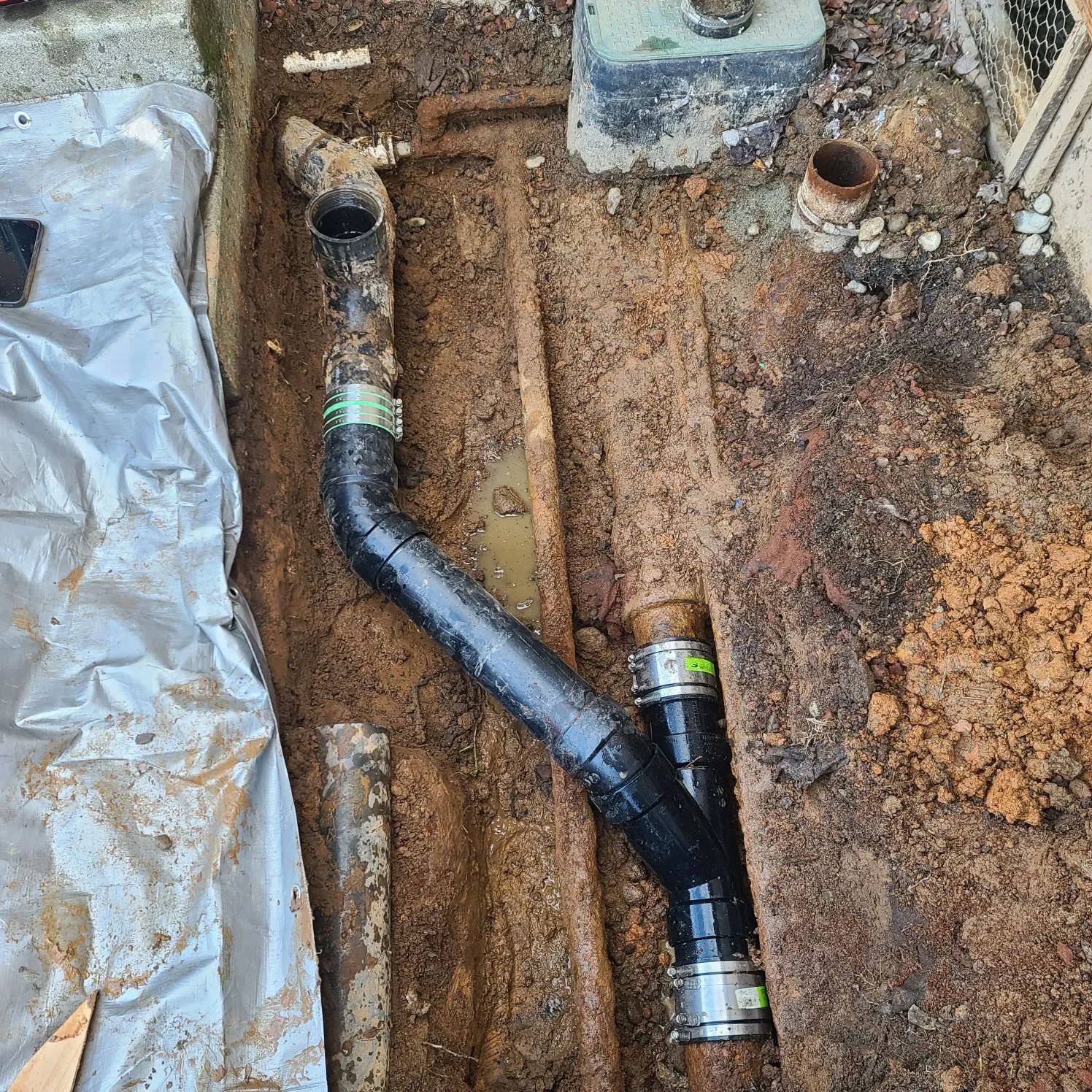
Quick Answer: Trenchless sewer replacement relies on one of two methods. Pipe bursting breaks apart the damaged pipe while pulling a new HDPE pipe into its place, and it works for collapsed lines or when a larger pipe diameter is needed. Cured-in-place pipe (CIPP) lining inserts a resin-saturated liner into the existing pipe and cures it into a rigid, jointless replacement, which suits lines that are cracked or root-damaged but still structurally sound. Both methods avoid digging a trench across a yard or driveway, and most residential jobs finish in one to three days. A camera inspection determines which method matches the actual condition of the pipe.
A camera crawls sixty feet down a clay sewer line and stops on a hairline crack running along the pipe's crown. That footage decides the next step, and for most homeowners it also decides which of two trenchless methods gets used. Pipe bursting and cured-in-place pipe (CIPP) lining both avoid tearing up a yard, but they solve different problems in different ways. Knowing how each one works makes the choice between them a lot less confusing.
Every
sewer line replacement in the Cameron Park area starts the same way, with a video inspection that shows exactly where the pipe is failing and why. From there, the method depends on what the camera finds.
The Two Trenchless Methods, and What Sets Them Apart
Pipe Bursting
A cone-shaped bursting head is pulled through the old pipe from one access pit to another. As it moves, it fractures the old pipe outward into the surrounding soil while pulling a new high-density polyethylene (HDPE) pipe in directly behind it. The result is a full pipe replacement, not a repair. Because HDPE pipe is heat-fused at every joint, the new line has no seams for roots to find, and it can be sized larger than the original pipe when more capacity is needed.
CIPP Lining
A felt or fiberglass liner is saturated with resin, threaded into the existing pipe through an access point, and inflated with air or water until it presses against the inside of the host pipe. Once the resin cures, usually within a few hours, it forms a rigid new pipe inside the old one. The original pipe stays in the ground and simply becomes the mold. CIPP lining doesn't add capacity since the finished pipe is slightly smaller in diameter than the host pipe, but it does create a smooth interior that improves flow and resists root intrusion.
The two methods use different core materials for a reason. HDPE gives pipe bursting the flexibility to be pulled around gentle bends and the strength to hold up under decades of ground movement. Resin liners give CIPP lining a pipe that can be installed inside a still-intact host pipe without disturbing the surrounding soil at all.
How a Camera Inspection Decides Which Method Fits
The condition of the existing pipe, not personal preference, determines which trenchless method applies. A few factors weigh most heavily:
Structural Condition
CIPP lining requires a host pipe that can still hold its shape during the curing process. A pipe that has partially collapsed, separated at the joints, or bellied from ground settlement generally isn't a good candidate for lining, since the liner needs something solid to press against. Pipe bursting works around this because it breaks the failing pipe apart entirely rather than relying on it.
Pipe Material And Age
Older clay, cast iron, and Orangeburg (bituminous fiber) pipe fail in different ways. Clay tends to crack and separate at joints, which lining handles well. Orangeburg pipe, common in homes built before the 1970s, often deforms or flattens under soil pressure, which usually calls for pipe bursting since lining can't restore a pipe's shape.
Access And Diameter
CIPP lining needs a way to feed the liner in, typically an existing cleanout, and works within the diameter of the host pipe. Pipe bursting requires two access pits, one at each end of the run, and offers the flexibility to upsize the line if the household has added fixtures or square footage since the original pipe was installed.
What to Expect During the Work
Both methods follow a similar sequence on site, with the details differing after step one.
Camera Inspection: A sewer camera confirms the location and extent of the damage before any work begins.
Hydro Jetting: The line is cleaned with high-pressure water to clear roots, scale, and debris so the new liner or bursting head can move through cleanly.
Access Point Setup: For CIPP lining, this means locating an existing cleanout or creating one. For pipe bursting, it means digging two small pits, typically about three feet square, at each end of the pipe run.
Installation: The liner is inserted and cured, or the bursting head is pulled through while the new HDPE pipe follows behind.
Post-Installation Inspection:
A follow-up camera pass confirms the new line is intact, and in the case of CIPP lining, that lateral connections have been reopened correctly.
Tip: Ask to see the camera footage before agreeing to a method. A plumber who walks through what the camera actually shows, rather than defaulting to one method for every job, is diagnosing the pipe rather than selling a service.
What Each Method Costs and How Long It Takes
Pricing for trenchless work is quoted per linear foot and varies with pipe depth, soil conditions, and the number of lateral connections along the run. As a general range, pipe bursting tends to cost more per foot than CIPP lining because of the excavation pits and heavier equipment involved, while CIPP lining's lower material and labor footprint usually keeps it on the less expensive end for lines that qualify. Most residential jobs, regardless of method, are completed in one to three days from the first cut to the final inspection. An accurate number for a specific property comes from a camera inspection and a written estimate, since pipe length and access conditions change the total more than the method itself does.
When Trenchless Replacement Isn't the Right Fit
Trenchless methods solve the majority of residential sewer failures, but a few situations still call for open excavation. A pipe that has fully collapsed along its length, a line running under a structure with no accessible entry point, or a sewer that needs to be rerouted entirely because of a foundation or slab issue usually requires digging. A licensed plumber will say so plainly rather than forcing a trenchless method onto a pipe that can't support it.
Materials Built to Outlast the Old Pipe
Both trenchless methods replace aging materials with products designed for a long service life. HDPE pipe used in pipe bursting is chemically inert and resists corrosion, root intrusion, and the soil shifting that cracked the original clay or cast iron line. CIPP resin liners cure into a corrosion-resistant shell that meets ASTM F1216, the industry standard for cured-in-place pipe. Manufacturer warranties on CIPP liners commonly run ten to twenty-five years, and properly installed HDPE pipe is rated for decades of service beyond that. Either way, the new line is built from materials the original pipe never had.
Frequently Asked Questions
Can CIPP lining fix a sewer line that has already collapsed?
No. CIPP lining needs the host pipe to hold its shape while the resin cures, so a collapsed or severely deformed section generally rules it out. Pipe bursting or a spot excavation are the usual alternatives in that situation.
Does pipe bursting let me upsize my sewer line?
Yes. Because pipe bursting fractures the old pipe outward and pulls a new one through, the replacement pipe can be sized larger than the original, which is useful for homes that have added bathrooms or square footage since the original line was installed.
Is CIPP lining or pipe bursting better for old Orangeburg pipe?
Pipe bursting is usually the better fit. Orangeburg pipe tends to flatten or deform under soil pressure, and CIPP lining needs a round, intact host pipe to cure against properly.
How long does resin take to cure during CIPP lining?
Curing time typically runs a few hours, depending on the resin type, liner thickness, and whether heat or ambient curing is used. Most residential lines are back in service the same day.
Will either trenchless method disturb my landscaping?
Both methods leave far less disturbance than a full trench. CIPP lining typically needs only a small access point, while pipe bursting requires two access pits roughly three feet square, which are backfilled and restored once the work is done.
How do I know which method my sewer line needs?
A camera inspection is the only reliable way to tell. It shows the pipe's material, the type and location of the damage, and whether the pipe is still structurally sound enough for lining or needs the full replacement that pipe bursting provides.
Choosing the Right Trenchless Method for Your Home
A hairline crack calls for a different fix than a collapsed clay line, and that difference is exactly why two trenchless methods exist instead of one. Pipe bursting rebuilds a failing pipe from the ground up, while CIPP lining works with a pipe that only needs reinforcing. Neither approach is inherently better than the other; each one answers a specific condition the camera reveals. Once that condition is clear, the choice mostly makes itself.
Quality Plumbing & Drain Services
has spent 12
years working on sewer lines across Cameron Park and the surrounding El Dorado County communities, and that experience shows up in how plainly the options get explained. A family-owned crew that walks a homeowner through camera footage instead of pushing one fix builds trust the same way a well-installed liner or a fused HDPE joint does, from the inside out. The right method was always going to come from what the pipe actually needs.